Managing Electrical Risks
Electricity kills silently. De-energise by default; energise only when no other reasonable alternative. RCD + test-and-tag + LOTO are the three controls regulators always check.
- Electrical work = licensed electrician only (state-issued).
- Construction sites must comply with AS/NZS 3012 (temporary supplies).
- Test and tag every 3 months for construction equipment.
- Portable RCDs: monthly push-button test, quarterly competent-person test.
- Energised work needs a written permit, two-person rule, arc-rated PPE, insulated tools.
- Electrical workers and safety observers need annual CPR currency.
1. Who's responsible
PCBU
- Electrical installation work performed by licensed/registered electrical workers only.
- Construction PCBUs must comply with AS/NZS 3012:2010 (Construction & demolition site electrical installations).
- Provide RCDs, test/tag programme, isolation procedures, training.
Officer (s.27)
- Verify systems exist (test/tag register, RCD log, training records).
Worker (s.28)
- Use as instructed; report damaged cables, missing tags, exposed conductors.
2. De-energisation principle — first rule
Work on electrical equipment must be de-energised unless one or more genuine exceptions apply.
Exceptions:
- Necessary for health/safety reasons (e.g. life-support).
- Equipment must be energised for the work itself (e.g. testing, fault-finding).
- Required to confirm de-energisation.
- No reasonable alternative exists.
Convenience or schedule pressure is not an exception.
Test for "dead" before you touch:
- Test the tester on a known live source.
- Test the target equipment.
- Re-test the tester to confirm it's still working.
- Assume all exposed conductors are live until proven dead.
- Re-test if you leave the work area.
3. RCDs (residual current devices)
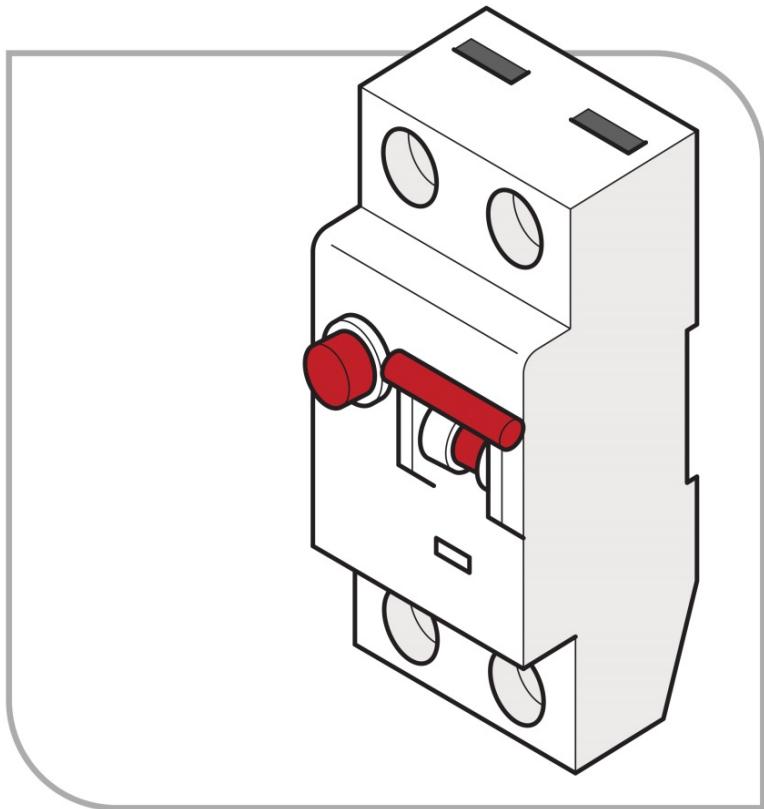 Figure 1 — Switchboard-mounted RCD. Fixed protection upstream of multiple circuits.
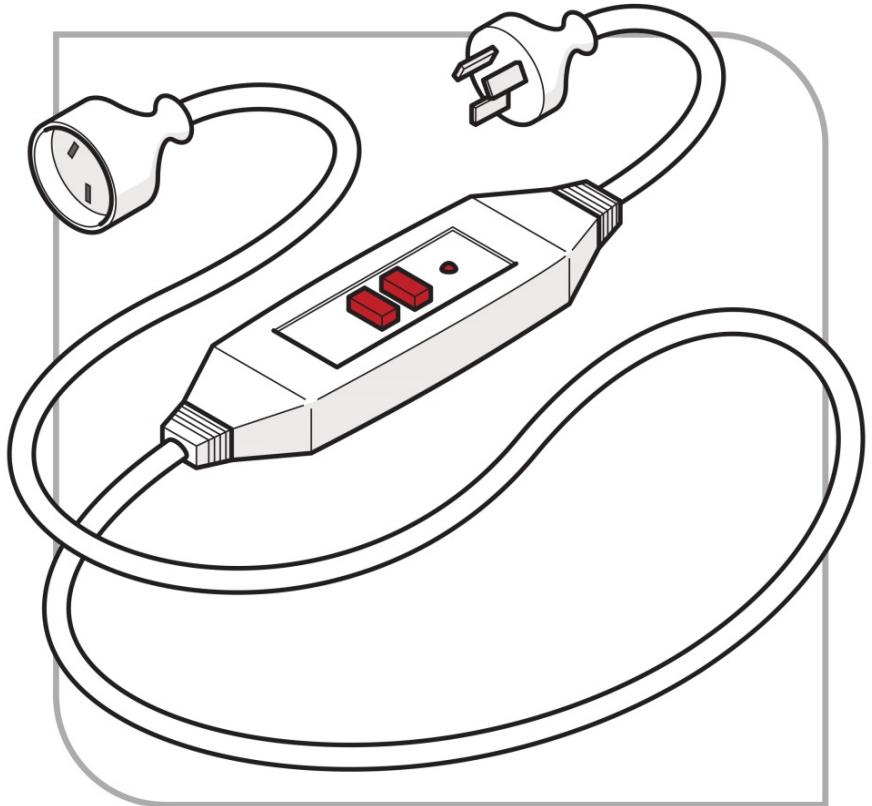 Figure 2 — Portable RCD on a power lead. Required where fixed RCDs aren't practicable, especially for tools used in hostile environments.
Required when equipment is supplied via socket outlet and:
- Used in hostile / higher-risk environments (wet, dusty, outdoor, vibration, corrosive, heat).
- Frequently moved or moved between job sites.
- Used on amusement devices.
Trip ratings
- Type II — ≤ 30 mA trip, ≤ 300 ms (general use).
- Type I — ≤ 10 mA trip, ≤ 30 ms (medical / direct patient contact).
Testing schedule (construction)
- New / on installation — full test by competent person.
- Monthly — operator pushes the trip-test button.
- Quarterly (3-monthly) — competent-person verification, recorded.
- Faulty RCDs — out of service immediately.
4. Test and tag — AS/NZS 3760
| Environment | Cycle |
|---|---|
| Construction / demolition site | Every 3 months |
| Manufacturing, workshop, hire equipment | Every 6 months |
| Office / low-risk | Every 12 months (or per AS/NZS 3760) |
Inspection checks — visual: cord damage, plug integrity, discoloration (heat/moisture), guards, cooling vents, ratings.
Electrical test — earth continuity + insulation resistance via approved tester.
Tag — durable, non-metallic, non-reusable; tester name, date, next test, outcome.
Records — tagger, date, asset ID, result, next due date — logbook or database.
5. Energised electrical work (when unavoidable)
When no reasonable alternative:
- Written risk assessment + permit by competent person, retained on site.
- Two-person rule — competent worker + safety observer (unless testing-only with no serious risk).
- Safety observer — trained in emergency rescue and resuscitation; assessed within 12 months.
- Arc-rated PPE — gloves, helmet/face shield, apron, non-conductive footwear matched to fault energy.
- Insulated tools — rated for voltage; inspected before use.
- Position & barriers — prevent inadvertent contact; restrict unauthorised access.
- First aid + electrical fire-fighting equipment accessible; CO₂ / dry-chem extinguisher, never water on energised gear.
6. Lockout-tagout (electrical isolation)
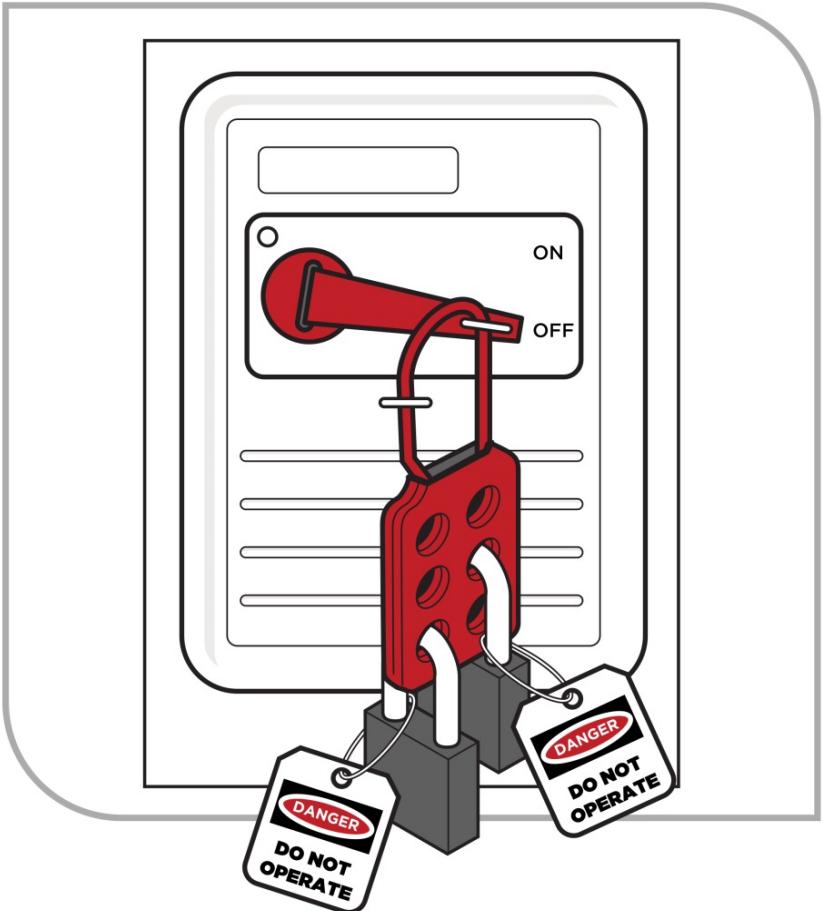 Figure 3 — Locking off a circuit breaker with a hasp + multiple personal locks. Each worker applies their own; supply can't be re-energised while any lock is in place.
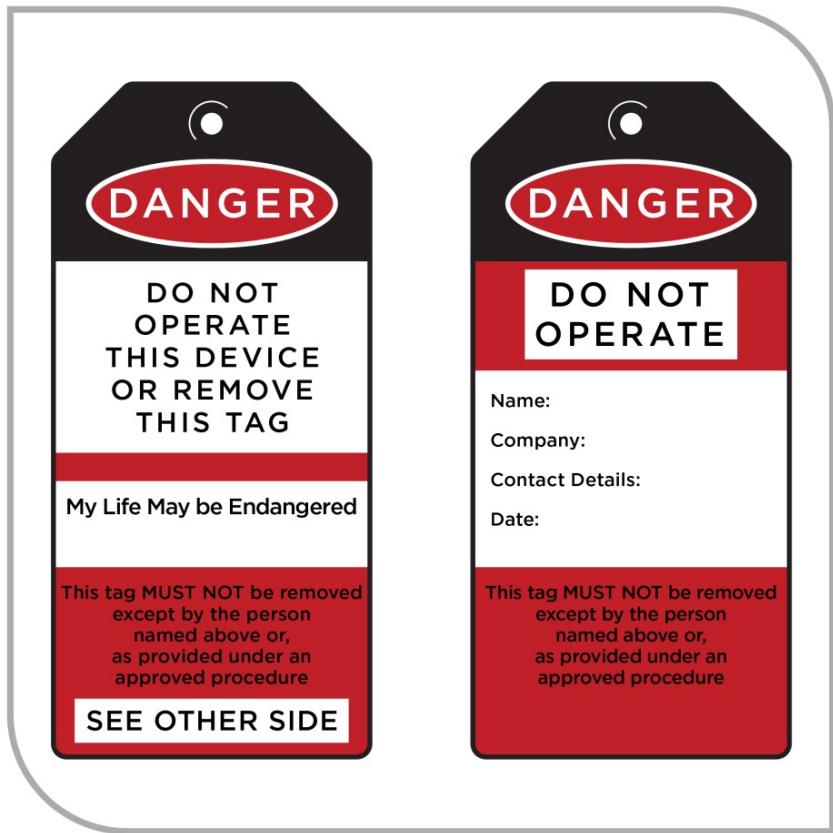 Figure 4 — Danger tag: identifies who, what, when, why; never to be removed by anyone other than the worker who applied it (or under formal escalation if absent).
Sequence:
- Consult workplace manager and notify affected persons.
- Identify all supply sources (multiple feeds, generators, solar, UPS, standby).
- Isolate — open and secure isolators; rack out / remove breakers where practicable.
- Lock at the point of isolation; under control of the worker doing the task.
- Tag — danger tag dated, signed, "supply must not be reconnected".
- Test — verify de-energised.
- Re-test if the worker leaves the area or work pauses.
For multi-person work: each person applies a personal lock; last off removes theirs.
Tags warn. Locks isolate. Tags alone are not isolation.
7. Working near energised parts (overhead, underground)
Overhead lines
- Risk-assessed before work; minimum safe approach distances per state/territory + standards.
- Eliminate (de-energise via supply authority) → physical isolation (insulated barriers / Tiger Tails) → exclusion / spotters → admin.
- No metallic / wire-reinforced ladders near live conductors. Wood or fibreglass only.
- Trained safety observer where work could intrude into approach distance.
Underground services — see excavation_work:
- Dial Before You Dig before any excavation.
- Pothole if location uncertain.
- Don't assume an unknown buried cable is dead.
8. Construction-site specific (AS/NZS 3012)
- Temporary supplies — proper protection and control; portable RCDs on socket outlets.
- Distribution boards — RCD-protected; weatherproofed; protected against site damage.
- Cables — supported off the ground where possible; protected from vehicle / plant damage; covered ramps where they cross traffic.
- Plant earthing — confirmed during install; tested periodically.
- Test and tag every 3 months (vs 6 / 12 elsewhere).
- SWMS required for HRCW work near energised installations (see general_construction_work).
9. Records & training
Records
- Risk assessments + permits for energised work — keep 28 days post-completion (2 yrs if notifiable incident).
- SWMS — for duration of work; accessible to all workers.
- Test/tag log — until next test, removal, or disposal.
- RCD log — monthly + quarterly tests.
- Training & licence records — sighted before mobilisation.
Training
- CPR / first aid annual for electrical workers and safety observers.
- Induction: safe systems, hazard reporting, emergency procedures.
- Work-specific: isolation procedures, tool / PPE use, energised-work protocols.
- Refresher periodic.
10. Common pitfalls / quick wins
Do
- "Test for dead before you touch" every time. The 3-step tester check has saved lives.
- Issue personal padlocks; one per worker; document the system.
- Dial Before You Dig before any excavation, even if you think you know the layout.
- Buy quality cable reels — heat / cord damage is the #1 fire / shock cause on site.
- Tag missed-test gear out immediately; don't keep using it "until the next round".
Don't
- Energise "for convenience" or to skip a short outage. Justify only by genuine necessity.
- Trust the panel voltmeter alone — verify with a hand-tester.
- Skip the safety observer because "it's just a quick check".
- Leave bare wires inside an open distribution board waiting for the sparky next week.
- Wear metallic watches/jewellery near live work.
11. Cross-references
- See also: managing_risks_of_plant (general LOTO / isolation principles), excavation_work (underground services), general_construction_work (HRCW + SWMS for energised work)
- Foundations: risk_management_process
- Glossary (RCD, LOTO, AS/NZS 3012): glossary_and_key_concepts
Source: managing_electrical_risks.md (Safe Work Australia, model Code of Practice, CC-BY-NC 4.0). Last verified against SWA: 2026-04-27.